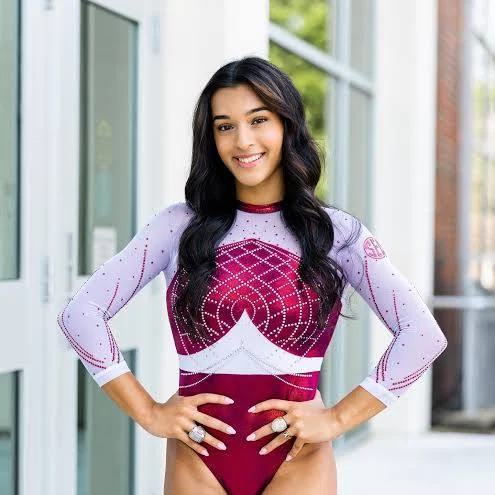
Luisa Blanco
2024 Olympian, NCAA Champion, Former University of Alabama Gymnast
Alabama Gymnastics: Luisa Blanco
Luisa Blanco was a former leader and standout gymnast for The University of Alabama. She accomplished some massive personal dreams including winning a NCAA Championship on Beam.
She then went on to dream even bigger setting her sights on competing in the Olympics and she achieved that goal as well.
Hence the title of the episode “Be Willing: It Could Work” her advice to anyone listening especially young gymnasts is to be willing to dream big and take the risk to put yourself out there it could work out just like you dreamed!
Follow Alabama Gymnastics: https://rolltide.com/sports/womens-gymnastics
Key Takeaways and Episode Recap:
In this episode, Luisa Blanco and Ryan Romano discuss the challenges of transitioning from elite sports to life beyond athletics. The conversation explores themes of self-identity, the struggle to ask for help, and the importance of mental and emotional growth. The guest shares personal stories about overcoming societal labels, building resilience, and redefining hard work. They emphasize the power of vulnerability, faith, and team culture, ultimately encouraging listeners to embrace the willingness to try new things as a path to fulfillment and growth.
Click For Full Transcript
Automatically Transcribed With Podsqueeze
Ryan Romano 00:00:02 Boom! What’s up everybody?
Luisa Blanco 00:00:04 Welcome the Luisa Blanco. I’m excited. I’m excited about our conversation because I know people don’t know that we’ve had some behind the scenes conversations, if you will, over the last, like a month or two. And I think that they’re super valuable for everybody. And so, as you know, it’s like we ended the conversation because we wanted to record it. We want to get it on camera. So, welcome. I’m excited. But before we get going, as always, while the funny story what you got for everybody.
Speaker 3 00:00:36 So I wouldn’t say it’s wild. Maybe a little bit funny. I’m just a very forgetful person. So I’m traveling right now, and when I travel, I like to do a workout class to kind of keep me occupied. So this morning, I did my workout class, kicked my butt. wanted to get out of there as soon as possible, so I did, and I got my car. I was like, wow, I’m really thirsty.
Speaker 3 00:01:00 Left my water bottle and it’s not like some regular old water bottle. Like it’s a huge jug.
Luisa Blanco 00:01:06 Okay.
Speaker 3 00:01:07 Like it’s not something that you forget. Like there’s a huge handle on it, and it’s actually not wine. It’s my boyfriend’s. And I just so happen to have lost the one he gave me, so I really couldn’t lose this one. so I go back to the place. It’s like a five minute drive back. I’m like, it’s fine. And there’s a class that already started. So I’m like, okay, so this is really awkward. And I’m walking in with my sunglasses. I’m like, I’m not gonna be pretentious. I’m walking with my sunglasses in the middle of the class. So I put my sunglasses on the, kind of like welcome counter desk thing. I grabbed my water bottle, and then I’m driving back home and.
Luisa Blanco 00:01:43 no.
Speaker 3 00:01:45 I’m just blaring in my eyes. And the tail of the story is my sunglasses are still at the studio, and I’ve yet to pick them up.
Speaker 3 00:01:53 So that tells you anything about me.
Luisa Blanco 00:01:55 Oh my goodness. Welcome. Wait. Have you always been like that? Were you like that in college, too?
Speaker 3 00:02:03 No, I. I forgot my grips at a meet one time, and I had to use my teammates as a scariest moment of my life, and then I forgot.
Speaker 4 00:02:19 I went back to practice.
Speaker 3 00:02:24 I was safe to say it wasn’t a good couple days for me, but ever since then, it was like, I’m not going to be forgetful of anything. And I think it’s just recently there’s something about specifically water bottles, but that’s crazy.
Speaker 5 00:02:41 I don’t know why.
Speaker 3 00:02:42 I can’t seem to get them in my in my mind.
Luisa Blanco 00:02:46 Oh man. That’s funny. That’s actually. I would not have pegged you as like a. I don’t know. Are you more, like, logical or like, an emotional thinker?
Speaker 3 00:02:57 I’d say emotional, for sure. Yeah, I’ve always just kind of with my heart. I don’t know, I’m a little bit slow sometimes too.
Luisa Blanco 00:03:05 That’s funny, that’s funny. Well, that’s a good segue into, I guess, you know, we were talking the other day just shooting the shit, if you will, just about life, career and what’s happening. you know, what you’re trying to accomplish. You know, now, like, post athletics and, you know, the conversations got started in the, in essence of, you know, you working to like, build the career and the things that, like you want to do now, like after your post athletic career and what the concept of of like asking for help got brought up. And so it’s been kind of a of recently it’s been conversations especially specifically with there’s some player development people that I’ve had on the podcast and, you know, helping athletes transition, right? Like getting them ready while they’re in the college to like, transition after after sports. And I you know that’s been a common theme I think a lot of athletes struggle with especially like high achievers. So I’m curious like in your brain, why is it why is it so difficult to ask for help?
Speaker 3 00:04:20 I feel it’s difficult to ask for help because I always just found a way, you know, it was never giving up, and I would I would try to do it on my own.
Speaker 3 00:04:31 And it worked. And it got me to where I am, right? That being said, though, I wasn’t truly alone. That’s like what I told myself in my brain. But I had a great support system. I had my family, I had my friends. Even though my upbringing was a little bit rough and rough on the edges. at yoga, it it made me who I am, and I. I was never truly alone. But that’s what I told myself in my brain for the longest that I could get through it on my own. That I didn’t need help. And so I felt the same way coming out of college. especially because you do immediately lose that, physical support system of not seeing your choice every day, not having to be somewhere, not having that structure. So then you kind of start to question everything. And I’m like, I can’t stop being stubborn. Like, that’s not going to get me anywhere.
Luisa Blanco 00:05:29 Right?
Speaker 3 00:05:29 You know, I’m talking that nobody’s gonna come in high five me because I did it by myself.
Speaker 5 00:05:33 You know?
Luisa Blanco 00:05:34 Yeah.
Speaker 3 00:05:34 So once I got out of that headspace.
Luisa Blanco 00:05:38 I wondered, because it sounds like for so long is. One of the things that I talk about with a lot of people are like stories, right? And it’s uncovering the stories that you’ve told yourself for so long that they’ve just become kind of part of your identity, part of who you are. And it sounds like, you know. For so long as maybe your entire athletic career, the story was, was like, well, I can just figure this out on my own, right? Like, I can do this on my own, which probably wasn’t true. But like in your brain, it was like, true. So what would have been go back to like being because obviously like having the success that you had, like as an athlete, there was probably some other stories that you had to like, uncover and potentially like let go of. And it could be, you know, when you were much younger or it can be, you know, in your, you know, college career.
Luisa Blanco 00:06:25 But what would have been some of those stories that you had to or beliefs or labels, right, that you gave yourself that you kind of had to do away with in order to achieve the success that you’ve had?
Speaker 3 00:06:38 I mean, absolutely, there’s so many different labels that one I think the world does kind of place on me. just naturally societally, like there are certain things about who I am, that kind of start to form your identity and become barriers in your life. So, I mean, one that I always just grew up with was kind of being the only brown kid.
Speaker 4 00:07:03 In the room and.
Speaker 3 00:07:07 Not necessarily being a bad thing, but me always wondering why, like, I was always different and then and I’m super open about this now, but my my parents, they work at the gym like nobody else’s parents worked at the gym and, and they cleaned the gym like they weren’t coaches. They were behind the scenes. So when everybody’s day was done, sometimes I’d have to stay back and like, vacuum the same carpets that we would use, you know? And there were just a lot of things that by default did make me different and really spirits in my life that were.
Speaker 3 00:07:42 I think I made them harder in my own brain because I never really talked about it, like I was so embarrassed as a child. Now I’m so open about it because it’s hard. My parents are going through life. Everyone’s parents are going through life for the first time, just like we are. But when you’re as a kid like you don’t think of that. You’re just like, my parents know it all. And they were just trying to give me the best future. And if that meant the gym and scrubbing the floors and vacuuming the carpets, like that’s what they did for me, and I couldn’t be any more proud. But as a kid, that perspective, you just you can’t really conceptualize what it means to, you know, have a better future for your for your kids. So yeah, it was just a lot of knowing that I was different and knowing that I don’t get a lot of chances in life, so I have to make the most of it. And that gymnastics was going to be my vehicle into a successful career, into a successful life, because it wasn’t.
Speaker 3 00:08:40 Not that anything is handed in life, but there are certainly easier routes. Some people have some easier routes and unfortunately had a lot of potholes and my navigation wasn’t working, so I’d have to reroute. And I eventually, you know, I’m still on the road, but I did make it to very like monumental destinations in my life. But yeah, there were a couple things growing up where I had to kind of get the idea out of my head that because I was different, didn’t mean I didn’t belong in the room. So that was always a narrative that was in my head that didn’t just carry me in gymnastics, but it was in the classroom. it was in the gym, obviously. Yeah. And yeah, it’s just something hard to break because systemically it’s in your brain for for so long and it’s in your face quite literally. And then I choose Alabama out of all these schools to go to. So, I think something beautiful about my story is just I used to always really be embarrassed or ashamed or not really know how to express and be my authentic self.
Speaker 3 00:09:54 And I did that so easily in college. despite going, you know, to a predominantly white school and someplace where people told me, why are you going to Alabama? Like you shouldn’t be going there? I’m like, what are you? Who are you to tell me where I should go? You know.
Speaker 5 00:10:08 Yeah. That’s.
Speaker 3 00:10:08 Wow. Yeah, I would say that’s the biggest one was just sometimes telling myself or other people telling me I didn’t belong in the room because I was different. And then me being like, well, I’m in the room, so what are you going to do about it?
Luisa Blanco 00:10:20 Yeah, yeah, yeah. Well, it’s funny you say that because I was literally having the conversation with somebody the other day is it’s amazing. Especially I think that like those college years, like 18, 19, 20, 21 are because that’s when you really like for a lot of people, that’s the first time they’re really kind of on their own, right? Like you can’t like turn in the kitchen and ask mom and dad for like, advice or favor.
Luisa Blanco 00:10:44 I mean, yeah, you can call them, but it’s just different. Like not physically having them present. And so I think it’s interesting how caught up we get in the labels that other people give us. And it doesn’t even have to be anything super drastic. It can be, you know, if you’re like if you’re a super outgoing and energetic person and you show up on campus and you you’re homesick, right? And you feel uncomfortable, and so you’re quiet and you keep to yourself. And then everyone labels you as like shy and timid. And people start to take on that identity because that’s how that’s who they assume that you want me to be. And so because I think that’s who you want me to be, that’s who I’ll present to you so that you’ll like me or fit in. And so it’s very interesting, just the power that we don’t even have to like these people. Right. Like, that’s the scary part is we hear something, you know, loud enough and long enough, we just adopt it as of kind of part of our identity.
Luisa Blanco 00:11:44 And so, yeah, I just find it fascinating how. How much other people’s labels play a role in our lives at that age, because we are so, for lack of better terms, vulnerable, if you will.
Speaker 5 00:11:59 Yeah.
Speaker 3 00:12:00 And I also think, like with gymnastics especially, it’s a sport surrounded by the pursuit and chase of perfection. And you’re going to listen to the people who know best and who know how to get you there. So not that our brains are wired a different way. It’s just we’re they’re manipulated for long enough to. That’s how they work, even into our adult life. like, I, I wish somebody gave me a handbook or gave me corrections as I was doing, as I’m doing the things I’m doing. But there’s just not that anymore. And that’s not normal. to always be correcting and always be fixing and always trying to do it the right way. Because in reality, there’s no right way to do something, especially when you’re in the pursuit of your own career.
Luisa Blanco 00:12:52 Yeah, totally. What would be some of the it’s funny going back to you mentioned as. Like beliefs and stories. Some of the ones that are placed in us are from like from a societal standpoint is that’s like to me that is like if I had an enemy, like, honestly, society would probably be like my enemy because I feel like there’s so many things that are hard wired out there to, I’ll tell you a big one that I have conversations with. And my question will be is what has you ventured off more on your own? You get to college kind of. Now your post college of recognizing some of what of those societal lies are, you know, for me is I think a big one is. And it took me till I was 32, 33 to like completely understand this. But like basically society will tell you, it’s like we’ll never leave anyone if they’re your friend, if they’ve never done you wrong. Right. So it’s like, even if you grow outgrow them, it’s like, yeah, but like they’re a good person.
Luisa Blanco 00:13:57 So you, we, we tend to like, suck ourselves back down to their level instead of them making a decision to either grow with us or don’t grow with us. And so a lot of people are living cliché, but are leaving living a percentage of the version of themselves that they actually should. and so I’m curious for you, what were some what are some of those societal lies like, if you will, that like you started to uncover that allowed you to potentially break free or that you got stuck and trapped with a little bit?
Speaker 5 00:14:32 Oh,
Speaker 3 00:14:36 I think the fact that I’m first generation, so I’m the first of my family to, you know, have the opportunity to go and get an education. Go be titled go, you know, have a degree. yeah. You’d be surprised, how many people tell you that you’re not going to be the one to break the cycle or not say in those words, but bring you down to earth, essentially, and make you feel like you can’t. but yeah, that was that was a really big one is my my parents weren’t hugely involved.
Speaker 3 00:15:14 They were never like the front runners and the parents club. They they never really a part of that. Like there was the language thing and yeah, so many like factors that played into that, that narrative of not really trying to break or not, you’re not going to break the cycle. But it’s one of those things that even though society is kind of throwing that at you or just your environment. I had I had my faith and I had my mom, like, my mom is one of the strongest people on this earth. Like, if anyone has the pleasure and the honor of meeting her like, you are blessed, truly, because I’ve never met a stronger woman to just uproot her life at such a young age. and do it so selflessly, like selflessly, obviously with the help of my father. But, my mom is just so strong and in the sense that she didn’t let those societal like roles, dictate her life. Like, she was the breadwinner. She was mom and she was dad.
Speaker 3 00:16:23 She is a go getter. She loves hard, and she’s emotional. so all the things that, like, people were telling her she couldn’t do. She did. And like go to the US and start a new life. Okay. Your kids aren’t. Yeah. You moved to the US, but your kids, they’re not going to mount or they’re not going to do anything like. Right. Okay. so that’s why when I if I’ve reached success or when I’ve reached success at any point, like, it feels good knowing that it’s not just mine and it’s ours. and I think that’s something really cool. And everybody has a different relationship with their family, but I just feel so blessed to know that I’m there. The reason I, I kept going, like I remember all the days I would come home and it didn’t even have to be with Jim. I’m like, mom, I’m quitting school. That’s just like, you’re gonna drop out. okay. Drop out when you get a good grade.
Speaker 3 00:17:30 And I was like, Or I’d come back from the gym and I’d have a terrible day. I’d get pulled in and get yelled at. I was doing something wrong, breathing too heavy, I don’t know.
Luisa Blanco 00:17:40 And but literally.
Speaker 4 00:17:43 Yeah.
Speaker 3 00:17:43 And I’m like, mom, I’m done. She’s like, okay. Quit on a good day. And I was like, that obviously is never going to happen.
Speaker 4 00:17:54 yeah.
Speaker 3 00:17:55 It was never she never, Like, raised me out of fear. Like she never pressured me into it. It was. She was just so strong in her character and in her ways that it made me want to be like her. So. Yeah. When when the world kind of tells you you can’t, and you come home at the end of the day and your mom tells you you can. That’s really powerful.
Luisa Blanco 00:18:24 Well, I was going to say, too, it makes a lot of sense to where going back to earlier, where you talk about kind of figuring it out on your own is a buzzword a little bit, but probably where a lot of like your grittiness comes from is you came home every day and saw your mom, who is extremely gritty and relentless, to just, hey, I got my mindset to something.
Luisa Blanco 00:18:46 And until it’s like literally ripped out from underneath me, like I’m like, I’m just gonna figure it out. Like, there is no there is nothing else kind of type thing. Well, I laugh too, because, you know, you know, read and I was talking with him yesterday and he was the example he gave was talking about, like, feeling good about yourself. And he was just like, man, there’s something about he was like, I would say, obviously not for like, everybody, but probably for the majority. He’s like, if you ever need to feel good, just pick up the phone and call your mom.
Speaker 4 00:19:17 Yeah, pick up the.
Speaker 3 00:19:19 Phone and call somebody.
Speaker 4 00:19:20 That you love.
Luisa Blanco 00:19:22 It’s so funny. It’s just. Yeah, that’s that’s very interesting. And. Yeah, definitely like Explains a lot in terms of a little bit. It starts to like puzzle a little bit of together of like, why you want to figure it out on your own and why those things? It’s like that.
Luisa Blanco 00:19:38 What? That was kind of a little bit. It seems like like of your example. so yeah. Interesting. What about okay, kind of a two part question. And this is something we’ve talked about a little bit, and I’m curious how this will, like, venture over and carry over into post athletics as well, is you’re telling me a story essentially like one of the big lightbulb moments for you was the mentality side of sports, whether that be, you know, like mentally or emotionally, I guess probably like intertwined a little bit potentially. what was it? I guess describe a little bit like what that lightbulb was in terms of. What was what was knocked over in your brain about like, okay, I’m having success, but I can take this to another level if I understand this side of the game, if you will, and how you’re leveraging that piece of the puzzle into, I guess, your life now in terms of like the mentality side of it, because I have a funny story, backup story after you tell this.
Speaker 3 00:20:50 Okay, I guess I’ll just I’ll push it back to before college because I think that’s really important. I was raw talent as a child, and I was super blessed to not have been injured until I think my first injury was 14. It was pretty significant one. But, I got really lucky and I would just do gymnastics. I was doing I would do what I was told, and I was a competitor and I was damn good at it, but I didn’t know how I was good at it. Like, I just knew that I loved the adrenaline rush and the feeling of, you know, when that green flag goes up and I have to look at the judge and go, I love that. But you couldn’t tell me what I was thinking about. I can’t really tell you a lot about my competition days before college, which is crazy. Yeah, because I think that’s what makes a great competitor, is knowing how to compete, but I, I never really did mental training. I just went out there and kind of, like, sent it in gymnastics.
Luisa Blanco 00:22:01 Yeah.
Speaker 4 00:22:02 Exactly.
Speaker 3 00:22:03 I was a very technical gymnast. So when it came to technique and things, I would be able to, like, register and compute and be able to execute. But when it came to my own process, I didn’t have one. And so that was fine. When the season is stretched out from January to August and you have like a total of 6 or 7 or whatever, However many meats you have as an elite gymnast, and then you get to college and you get humbled quickly when you have a meet every Friday night, and you have to replicate the same process with your body hurting with 20 credit hours of school, what have you. So many scenarios growing up and it being college like, there’s just so much to do. So just sending it was not an option anymore. And. It was one of those things where I was having mental blocks and I’m like, at the ripe age of 20 years old, I’m having a mental block like, I thought this was for kids, right?
Luisa Blanco 00:23:07 Right.
Speaker 3 00:23:07 So there was just a lot of things that I was encountering for the first time, because I had never put thought into the mental game. I thought it was always physical. just like I always thought gymnastics was always individual. And once that shifted to more of a team first mindset. And not that I didn’t love my team, but I always went with it. Like, if I hit, like I’m doing my job. Yeah, but it was tunnel vision and I didn’t get the most out of my college experience until I learned how to truly be one, a better teammate, listen, be vulnerable. And that’s when I started seeing a sports psych. And as embarrassing as I thought I it was in the beginning, like I couldn’t get down the vault runway without messing up my steps again. Like I didn’t go for a vault like my. I think it was my senior year. It wasn’t my senior year. I don’t even know, like so many things that you wouldn’t think would happen because you’ve been in the sport for 15 plus years, and they happen.
Speaker 3 00:24:14 And it’s because you have to sharpen your mental game because it starts to become like this, this broken record essentially. So like, you’ve got to you got to change the disc. You’ve got to, you know, blow on it. You got to do something. Yeah. So that was that was my version was, you know, bringing somebody in. working through what my process was going to be, most of it was just letting loose and bending it, but with a purpose and like, having intention. And then I would say that, like my secret weapon. and everybody has their own version of it was just finding, like, my own personal connection to what faith means, because I always heard that word like, yes, we always prayed for competitions, and I was very respectful of it, but I didn’t have faith. and I think once I kind of unlocked that and started having a something where it kind of just took the pressure and know that, yeah, what I do pure is cool, but like, it’s not me that’s doing it.
Speaker 3 00:25:23 Like, I didn’t I don’t know, it’s way bigger than me. It kind of just takes the pressure off and then you can go and compete freely. And even if you fall on your face, it’s like, well, we’ll learn from it and we’ll move on because it’s really not that big of a deal in the grand scheme of things, so that there’s a lot of different components in that, and it’s different for everybody. But for me, it was just letting people in, talking about it, figuring out my own process. whether that was there’s so many and they would change all the time. It would be like affirmations or it would be breathing or it would be visualization sometimes, or it would just be a prayer before I did a routine so that I knew, like, I could be free up there. so there’s just a lot of different things, but things that I’d never done ever previously, like in club or in the league. Nothing. So it’s really empowering when you when you figure those things out and then you’re able to replicate success and know why it’s happening.
Luisa Blanco 00:26:29 Yeah, I think the like understanding, like why it’s happening is I tell like a lot of the kiddos is I’m like, when’s the number one time you’re going to want to come talk to me? And almost every single time they’ll be like, when something bad has happened, when something’s wrong, right? When they’re trying to figure out a problem, a hurdle, a struggle. I went, honestly, the best time to come talk to me is when things are going really well. Because if you don’t understand why they’re going well, that’s a problem, right? And it I feel like so many athletes get caught in that loop is all of a sudden they start having a bunch of success and it’s like, what? At some point, probably for most, there’s going to be either a moment or a period of moments of doubt, uncertainty. you start to question yourself. And if you never knew why you were ever were able to get up there. It’s like you live in this, like crash and burn cycle, you know, and it can be your entire career.
Luisa Blanco 00:27:24 It can be just one season. But helping people uncover to to your piggybacking off your point of like why you’re having success is probably the biggest secret sauce I would give anybody.
Speaker 3 00:27:39 Yeah, and it’s crazy because there really is no secret sauce other than you actually having to put in the work to get to know yourself and with the, you know, rise and grind of every day and, and your own schedule and your structure, you don’t actually make time for yourself. You don’t take moments to just breathe. And I remember I had this stupid exercise I had to do to like it was a mental exercise. It was like, write a love letter to yourself. And I’m like, you disgusting. Like, why would I do that? It’s such a waste of time. And yes, I was cringing in the moment. but then you get to read that letter, like a couple months or like a year down the road and see how much you’ve grown or, my assistant or I guess he’s associate. Now, associate head coach Justin Spring.
Speaker 3 00:28:34 Love that guy to death. But he had us, essentially write our speech for our senior banquet. So if somebody was going to, you know, get on a podium and speak about you and what your legacy is going to be like, what would it say? And we were like, whoa. Yeah. but it’s it’s in those moments where you actually genuinely are speaking your intentions and, and what you want to be or what you want to leave. That’s where you see change. Because if you’re just if you’re just surviving your days, like, is anything really happening? and you come to find out that it isn’t. And I understand why people are, like, super just steadfast in their faith. And that’s that’s what allows them to see so much success. Like, I understand why that is possible now. Like a couple years ago, I’m like, I don’t get it. But that’s because they did the work to have their own personal connection with God. Or if you were spiritual, what have you.
Speaker 3 00:29:54 They did their own personal work and that’s hard in itself. So there can be so many things, like finding the right way to breathe so that you can calm your nerves. It’s not an easy thing to do when you’re in the moment and you’re trying to stay on the beam, but also breathe, but also finish the routine in 90s. And, you know, there’s a lot of things, but, yeah, that is the secret sauce. But like, everybody’s got their own.
Luisa Blanco 00:30:26 Yeah. Oh, yeah. For for sure. I’m curious too. It’s like as you started to venture down personal identity, finding yourself, self-awareness, spirituality, faith and just just that rabbit hole a little bit. Was it like, is your personality like, from the very first meeting to whether it was sports psych or a mentor or a different coach? Was it dive headfirst in, or was there a lot of hesitation of to your point, like because hesitation, because I often see so many high level athletes get caught on the hamster wheel of defining hard work in terms of physical, hard work.
Luisa Blanco 00:31:09 And I’m like, you probably don’t need to run two extra miles you don’t need. You know that 100 extra push ups is the hard work is on you. The hard work is the letter. The hard work is the journaling. The hard work is reading the ten page PDF on how to breathe and practicing that like that is the hard work. And I feel like so many people don’t recognize that. And essentially it’s like why there’s the 1% and the 99%, right? Because that 1%, that is how they were different. They do invest in themselves in that way. And so as you began on that journey, was was there a lot of hesitation reservation of like, yo, we should be in the gym. What are we doing in here? Why are we writing letters like Jesus Christ? Like, come on down here.
Speaker 3 00:31:54 Yeah. So I used to be that kid. I, I don’t know if I’m going to explain this the right way, but when I would get frustrated and mad at myself if the assignment was Hit three or do five.
Speaker 3 00:32:13 And let’s say like I hit like three decent routines. I did the five anyway, but then I would keep going, but I would do it to the point of frustration that if they weren’t perfect, like if every single one wasn’t perfect, I would just shut down. Like being like my woe is me and don’t talk to me like kind of work mode. And I thought because I was pushing myself to the limit and grinding and getting like satisfaction and the sense that I was putting in reps. Like that was the work. And I was like, no, dude. Like, take a step back. This is what it looks like from the outside. You look frustrated. You’re bringing down the energy in the room. We’re saying this out of love, but it’s like I’m calling you out. And it just came to a point where that was one unacceptable. And two, I was better than that. And so then that’s where I had to kind of change my definition of hard work. And I wouldn’t necessarily say I had hesitation.
Speaker 3 00:33:21 I just had never, never done it before. And I didn’t know if it was going to work. But I was trying all the physical things to try to make it work. I was at the point where I’ve got nothing to lose. Like, let me just try everything. Like, let me try journaling. Let me try meditating. Let me try visualization. Let me try breathing. Let me try praying like it ended up just coming down to a combination of of so many different things. And I made it. My brain is weird, but like I made it specific to the event. So like for vault, it was so mental for me because it’s 10s long and I was messing up my steps, and then I’m on the table and suddenly I’m not. I had to break it down so much. so that was more of like a visual and a feeling event for me. So I would have a cap of like I had to I wanted to get my sick percentage up, but it was like five max and like I, I had to walk away at five.
Speaker 3 00:34:23 So that pushed me to when when practice was over and we would always film our like our practices. I’d get the film back and I would literally stop it moment by moment by moment. Okay, I got my hands turned down. This way, if I put my hands up, it’ll give me more time. All right. I’m opening my arms. Too late. Let me wait half a second before I open them, and maybe it’ll let me sink into my landing. Just. Those are ultra specific. But that’s what I did on vault. But I couldn’t replicate that on bars because I needed to be slow and graceful and swing. So those were more just like affirmations of breathes. You got this rhythm. And then floor was like a let loose of it, so I could kind of just dance and be in my element and feel it all. And being was more of like, I had a personal connection with beam, and because out of all my like moments in my career, beam was always my favorite because it always just felt like I was the center of everything for like, 90s.
Speaker 3 00:35:32 and you don’t get that often. So like, I would always just touch base with, you know, with my maker. And I would always just pray and it sounds silly, but like that’s what allowed me to compete. And so it was different for everything. And I did a whole lot of a lot of things. But it was because I was tired of not seeing results from the physical work. I even read a book on tennis, like there’s so many things that I just I was willing to try. And that’s what made me confident, Because the feeling of confidence is a whole bunch of BS. Like if you base, like your success on on feelings, like being able to replicate that is very difficult. But if you’re just willing to try, then however many reps or however many times down the road that you’ve done said thing, you realize, oh, I’m confident because I’ve done it so many times, you know? And I was willing to try different things.
Luisa Blanco 00:36:34 Yeah. Once you have the I call it like stacking your deck, right.
Luisa Blanco 00:36:37 Like once you have the proof and evidence, then like the it becomes like a, like why not? Like, why would why would I not succeed? Right. Like it’s like I can’t I can’t even come up with a reason. It’s not trying to convince yourself. It’s like you literally can’t come up with a reason as to, like, why you wouldn’t have success.
Speaker 3 00:36:55 It’s kind of just. I used to always say, what if? And then it kind of changed to why not? Like why? Why not go for it? That’s the whole reason I went to go compete at the Olympic Games. It was like, why not in my career with a bang? Like it was so a joke in the beginning. Like, how funny would it be if I ended my career at the Olympics and I wasn’t supposed to get this last fifth year? I graduated high school early, so essentially my senior year would have been 2024. Just so happened that I wanted to accelerate the process and it became my fifth year.
Speaker 3 00:37:34 Like, how freaking cool would that be? And then my coaches were like, well, why don’t you do it? We’ll support you. And I was like, no way, okay, let’s do it. And then just one thing came after the next. At that point, once I started saying, why not.
Luisa Blanco 00:37:53 Sir, are you pretty good at making decisions?
Speaker 3 00:37:58 I think I’m definitely better now, than before. But I wouldn’t say like I regret any decision that I make. I don’t think I don’t think it’s a hard thing for me to do.
Luisa Blanco 00:38:12 Well, the reason I ask that is if I had to guess, I would have said, you’re you’re good at making decisions relatively quickly. And I say relatively just in comparison, probably to other people. definitions matter. And so like I define well, actually, if you look it up from its Latin root, decide means to cut off. And so when I decide on something I’ve cut off all other options. And it sounds like your brain’s a little bit wired in that way in the sense of like, yeah, like I already I already decided this.
Luisa Blanco 00:38:44 Like, there is no there is nothing.
Speaker 3 00:38:47 I would say I’m definitely like that even not just like making decisions, but just like relationships with friends or like people. I’m a very firm believer that, like, you are who you surround yourself with. And if that’s not working, you guys outgrow each other. Like like no hard feelings. Like Sia. Like I’m not. And it’s more I’m talking for, like, my girls out there. Like, if there’s a boy out there that is. He’s not treating you right. He’s not worth your time. Like Sia, you know, like, no more lingering conversations. Oh, but we can be friends. No. Cut it off. Like I’m trying to make it a lighthearted conversation, but that’s just kind of how I’ve always been. You know, if you. If you stay stagnant, if you stay stuck, like you’re just gonna stay that way. Like something’s got to change.
Luisa Blanco 00:39:37 Yes, yes. And like. To your point is, I think a lot of people stay stagnant.
Luisa Blanco 00:39:45 They stay, you know, playing on the same plane, if you will, like their entire lives. because they struggle to. I live by like this is. This is if I could sum like my life up into like one line, it would be you don’t get what you want, you get who you are. And so to your point, you become the person, the people that you’re around. And so it’s constantly taking inventory of do I love the person that I’m becoming right now? And if not, then I need to make some changes. That could be my environment, that can be, you know, through a book that can be, you know, through different mentorship groups. You know, I just think that so many people again, I you can to me is you can be victim or you can be creator. And I truly believe we have that is the greatest gift that we’ve given is, is the power to create, power to make decisions, the power of choice. And so it’s like you can become more, but you have to be willing to decide that.
Luisa Blanco 00:40:45 You have to be willing to get out of the relationship. You have to be willing to extract yourself from those friends, and then your entire life will change. And I had this conversation with somebody the other day, and they literally looked at me because it was centered around, like somebody told me, they were like, yeah, my friends don’t set goals. My friends don’t have ambitions, my friends don’t like. That’s just those are the people that I’m around. And I was like, I mean, I can’t tell you what to do, but you are trying to become a high achiever, right? You are trying to be ambitious. You’re trying to do something that you’ve never done. And if you’re hanging around, people that just meander through life, for lack of better terms, is maybe you should take inventory of that so that you can personally separate yourself and become more and. A lot of people struggle with that. A lot of people struggle with that.
Speaker 3 00:41:39 I think it’s because people care. Like nobody just wants to walk away from something.
Speaker 3 00:41:44 But knowing that, like, time doesn’t stop for anyone and this is your life like your one. I would say the one person you have to love so dearly because you’re stuck with them for the rest of eternity is yourself. And a lot of people think for others. And it’s not that you can’t have that. It just can’t be your entire like heart because then it’s not. It’s then you’re living for others and that’s it’s hard to separate the two. but I just think it’s because people care a lot. And I think that is a good thing. It’s just learning how to care and learning how much you can give but still have for yourself and making yourself a priority. And that’s that’s not a bad thing, making yourself a priority. It’s not.
Luisa Blanco 00:42:38 Well, I think in y’all’s in my experience and y’all’s sport specifically too, and this is probably definitely ventures more towards like females versus males a little bit too. but thinking in absolutes. Right. It’s like I’m. I’m arrogant or humble. I’m like, there is a spectrum, right? Like there is there’s a scale in that way of like, I have to I have to care or I don’t care.
Luisa Blanco 00:43:04 It’s selfish or selfless. I’m like, but there’s a combo, right? There’s a spectrum because at the end of the day is a lot. There are a lot of decisions that you are going to make selfishly, right? Like, I mean, I don’t know, it’s like if you’re going to get married or something like that, that’s a selfish decision. This person is for me. I’m not thinking about anybody else. This is what I believe is is right for me and, you know, the rest of my life or, you know, whatever the whatever the thing is. And so I think getting people to get away from everything’s black and white, everything’s 0 or 100, everything’s, you know, in such absolutes. I’m like like there’s actually the last time I was at twice the way that I proved this is I asked a couple of the girls, I was like, so why do you come talk to me? And they’re like, because I want to grow. And I was like, oh, you show up here for selfish reasons, and they’re like, whoa, whoa, whoa whoa whoa.
Luisa Blanco 00:43:57 I was like, no, it’s okay. Right? Like, that’s okay. I’m telling you that it is okay. You’re here to grow. You’re here to invest in yourself. And I’m here to pour back into you. I’m here to help you do that. That was a selfish decision. And you could. You should pat yourself on the back for that, because not everybody is willing to have those level of conversations. Not everybody’s willing to invest in themselves. And so getting people again, part of kind of the identity to step out that sometimes I do need to think for myself and that’s okay.
Speaker 3 00:44:24 Yeah. Hard truth for some people. For me it was very hard. yeah.
Luisa Blanco 00:44:33 So have you. Here’s because I wanted to go back when you were talking about, like, the, I guess, kind of a two part question as well, when you’re going through, like, the grind, grind, grind, hustle, hustle, hustle like phase in terms of gym, did did that cause you to maybe internally potentially like beat yourself up a little bit.
Luisa Blanco 00:44:56 I know you mentioned kind of frustration because I would tie that back to was there a period. Was there ever a period in your life where potentially you kind of struggled with self-love? And so that’s when it became a little bit more about you. Hey, I’m going to figure this other piece of the game out so that I can love myself so that I can find peace and joy in what I’m doing. And that will hopefully at that time, because it was just kind of a fingers crossed. We’ll see what happens. Hopefully I’ll find more joy, more excitement, more, just being nice to you. So I don’t know, just be nice to yourself. Right.
Speaker 3 00:45:34 There are a lot of times, I mean, the journey before the Olympics, it it’s like two it was two years essentially of, really like. Yeah, two years of of nonstop, and no breaks. So it was learning how to give myself grace. It wasn’t. I was beating myself down to the core. I would say in those two years, I’d never been nicer to myself because I.
Speaker 3 00:46:03 I wasn’t going to make it to the end of this if I kept beating myself down. Yeah, I did have very hard days. but I was so fortunate to have such great people around me that they didn’t let me go down that rabbit hole, like, too much. I just remember it was the summer or two summers before I went to the games, and I ended up going up to Minnesota and training with Suni. She needed a partner. We’d known each other since we were little, and I needed to train, and my gym was being renovated, so I didn’t have anywhere to go. And I was like, I guess I’ll just book it to Minnesota. And I lived in Minnesota for a couple of months, and, that was like I had been transported back to my childhood of wake up, Jim, go nap Jim, have dinner, do it all over again. Like. And it was. I felt like my own personal hell. Like it was just. Yeah. That was probably one of many of, like, almost breaking points of your training with the reigning Olympic all around champion.
Speaker 3 00:47:14 This person also has bad days. Her bad day I couldn’t even do on my greatest of days. You know what I mean? So it it was a real, battle of of choosing. Choosing what demons I was going to let in that day because I knew I wasn’t going to survive. And then I had my boyfriend tell me. I just remember being like, I hate it here. Like, I, I can’t do it. I don’t know if Suni doesn’t think she can make the Olympics, like, what am I doing? Like thinking I can’t. And I mean, she had her own thing. Like, her story is incredible. And, I mean, just getting to see firsthand how much her illness affected her. I was just like, wow. It just was incredible to watch her work and work through that. but then it gives me perspective and I’m like, I really have it. Great. I have working kidneys, like, let me stop complaining about my gymnastics. So, yeah, just a lot of moments where I just like, I had the angel and the devil.
Speaker 3 00:48:29 It’s like the devil is like real, real loud. And it’s me just being like, no, not today. We’re not doing this today. Like, I am choosing to have a good day, even if I don’t believe it. Even if my body feels like absolute garbage. I’m choosing to have a good day and it would be switching the music. It would be asking Ali to do conditioning with me like it would. It would be stupid things, but it was just a choice of, I’m not going to let this win or this thought. One that got me through so many different phases of like getting to the point where I was going to crash out and break and just being like, no, I’m going to rise above this. No, I just need to get like 1% better today. I don’t have to win. I just need to get a little bit better and I will get there. it’s just a whole lot of that. Like my, my coach, Ashley Johnston, she loves this, metaphor of, like, building a cathedral.
Speaker 3 00:49:36 And it’s essentially where. And it’s all imagination. So, like, you use your heads, but you’re walking up to these three men and they’re all building a cathedral, and you walk up to them and you ask them the same question, like, what are you doing? But I go, I’m just I’m stacking bricks. Second, guys like, oh, what are you doing? Oh, I’m getting paid. Like I’m just getting through the day. And then you have the last guy and he’s like, I’m building a cathedral. That’s what I’m doing. And it’s it’s a funny little, like, parable, like, it’s it’s a really short story, but like, it puts into perspective, like, what are you doing? Are you coming in? I’m just practicing. Oh, I’m just getting it done. I’m going to go to the Olympic Games. I’m going to be part of the reason my team makes it to a national championship. Like, that’s what I’m doing today. And so it’s.
Speaker 3 00:50:32 And it’s all repetition. Like, it may sound stupid in the beginning, but the more you repeat it to yourself, the more it starts to become your normal. And so it’s not just, oh, I’m coming in and I’m doing my stuff, and once I’m coming in with a purpose, I’m coming in because of this. I’m coming in because my purpose is greater or his purpose is greater.
Luisa Blanco 00:50:54 Like, yeah.
Speaker 3 00:50:55 So many different things that you can tell yourself, but it’s just choosing, choosing the right thoughts instead of the wrong ones, even when you don’t want to.
Luisa Blanco 00:51:04 Well, and I think to like piggybacking off the the analogy is it’s fascinating how many times you take a step back and ask somebody. So it makes me think of, I call it like painting the picture. Right. So being able to can you in your imagination, if you were an artist, can you literally paint me so that I can see it, what it is that you want. And most people don’t have that level of clarity.
Luisa Blanco 00:51:38 It is something very well. I want to win. I’m like, I don’t know what that means, right? There has to be some level of definition and it’s okay. I want to be a national champion. Great. Now paint me that picture in terms of what it actually looks like. What do you see? What do you hear? What are you feeling? What are other people saying to you? What are you going to tell me? What are you going to say when they interview over here? What are you going to be wearing? What are you going to like? Can you literally build that out as like a Netflix movie in your brain? Because that in my in my mind, that becomes very moving on the days that I don’t feel like to be there versus like, well, I just want to win. It’s like, well, that’s not very exciting, right? Like, you don’t even probably know what what winning looks like. And, it’s interesting, had a conversation not too long ago with somebody and they were ready to walk away from the sport.
Luisa Blanco 00:52:30 They were ready to they sent me a text and was like, I’m done. I was like, cool, great. Let’s just have let’s just have a quick conversation about this before you, before you go into your coach’s office and fortunately close enough with this person. And the first question I asked them, I was like, well, how do you define success this year? And she was like, well, I don’t know. And I was like, well, how do you run from something you don’t even know what you’re after? And she’s like, well, I’ve never really thought about it that way. I was like, you’re just frustrated. You’re just embarrassed. And that’s okay. Right? But it’s you can’t run from anything if you don’t even know what the picture’s supposed to look like. You can’t run from anything if you don’t have that deeper level of meeting of the actual, like, cathedral. And, I just find it very. Because I’m guilty of it, too. Not long ago, my mentor, I was like, I’m ready to work together.
Luisa Blanco 00:53:21 And she’s like, let’s get on a call and figure out why it is you want to work together again. So I knew she was going to ask me something along those lines, right? Of like defining success. What is it that you want? And like two minutes in, I’m explaining, like trying to paint this picture. And I was like, I’m just not super clear on it. And she was like, I knew you wouldn’t be. That’s why we’re having this call. And I want to help you get really clear on what that is. So I actually know how to help you and I, I would encourage a lot of people piggybacking off of you to be able to do they know what the picture looks like, do they know what they.
Speaker 3 00:53:54 Don’t actually write it? Right. Write it down and put on paper what you want because a lot of people don’t. And for me, it was I had this overarching goal of, I want to make it to the national championship with my team.
Speaker 3 00:54:09 I want to go to the Olympics and just like, be the most free and happy I’ve ever been in my sport. Like those, those were my goals and the way to get to those particular goals, it wouldn’t be what you think. It’s not like I gotta run and be consistent and be lifting and hit this many routines like, yes, that is a part of the process, but getting to there was I need to have a good practice and not just completely because I would finish practice and be gassed out, go, maybe go get dinner and then go straight to my room and just like bedrock or do my schoolwork in my bed.
Luisa Blanco 00:54:56 Like, yeah.
Speaker 3 00:54:58 Like getting to my goal was building my mental like, fortitude and capacity and what I believed like I could take on. So it was having a good practice meant like I could have fallen on everything. But if I was still like, kicking it with my girls, if I was still dancing, if I was still singing, having a good time, cheering for my teammates like that is success.
Speaker 3 00:55:29 That was success in my book because that was something I struggled. I was always just in my own tunnel where I would get frustrated. So the more I was able to do that, it was a like a shift towards positivity that like, allowed me to just have better practices because I was a happier person coming into the gym than I was. You had so many happy days together that when the bad ones come around, you’re like, it’s okay. Like there’s going to be a better day and you work through it. so yeah, that’s that’s a small goal. It was okay every Tuesday night, like, I might be tired and done with the day because I just had an 8 a.m. in the morning for class. I’m going to make it to FCA tonight, even though it’s at seven, and I know it’s going to be an hour that I might need to do or catch up on something. It’s going to be my hour where I can see other student athletes, where we can connect, where we can have snacks and I’m going to feel better about it after.
Speaker 3 00:56:37 Oh, that’s another way to get to my goal. Like that’s another way to just better yourself 1%. And that will help towards your overall goal. It’s like I think that’s another thing too is people make their they think their goals have to be so big. It’s like your goals don’t have to be that big. They’re your goals.
Luisa Blanco 00:56:58 Yeah, yeah yeah. And like a lot of people do. I tell a lot of people you don’t. Going back to where we’re talking about, like you were extremely clear on. Like how you wanted to feel in the sense of, hey, like, I need to bring more joy. I need to bring more excitement. I need to bring more connection into my life. And it wasn’t just I think a lot of people get so one track minded is like, okay, well how do I find joy, excitement and connection in the gym? I’m like, but it doesn’t have to be like that because you’re just wiring yourself to feel those things. And it’s like it can be at FCA.
Luisa Blanco 00:57:43 Great, I feel connected. I’m around other human beings that I don’t see, you know, all day, every day throughout and have different levels of conversation, which shifts my perspective, which makes me feel connected to different types of people. It’s exciting to have non gym conversations or whatever. It’s to talk faith, to talk religion, to talk. Right. It’s like those are the things that they’re after. And so I think getting people I would say it’s like most people don’t a lot of times don’t lack the ability to dream big. They lack the ability to dream clear. And your in our conversation, it sounds like whether this was your entire life, but at least in those periods, is like you were pretty clear on like what what it is that was going to help you achieve the things that you wanted to because you’d set yourself up in the picture, right? It’s like, I need to do this. I need to do this, and I need to do this, and I don’t.
Luisa Blanco 00:58:35 I think I was just.
Speaker 3 00:58:36 Like, I was just painting. I don’t even know what I was painting like. I had an idea of what I wanted. And then it’s like it’s all said and done. You get to look at the the beautiful thing that you just created. It might be a whole bunch of scribble scrabble, but like, if you like it, like it’s yours, you know, and only you know what it means. I actually love art. Like that’s one of my favorite things to do. Like when I go travel is like, go find a random museum, like, literally anywhere, okay? And go to art and I, I don’t do like the guided tours. I just like, sit there and I’ll be like, I wonder what all these lines mean. I wonder what this means. I wonder why they chose these colors and these shapes. Or like, I love modern art because it has to do with real life and it tells a story. And I don’t know, I was like, never thought I’d be an art person, but turns out I am.
Luisa Blanco 00:59:30 That’s okay. Are like, are you artistic? Like, can you paint? Can you draw?
Speaker 3 00:59:34 I, I cannot I think the only artistic thing I can do is, just like movement, like with my body. I’ve always told people like, had I not been a gymnast, I would have dead on, been like a ballroom dancer. Like, I just, I love it, but, yeah, I cannot draw, I cannot paint. I try to think if I can do anything like that, my mom and my brother can, but I did not get that gene.
Luisa Blanco 01:00:03 Yeah. Palette that. That’s one I always say, especially like music is like, if I can go back, I wish, like I could play an instrument. I just think that’s so dope. Like, I.
Speaker 3 01:00:14 Played the flute for like a year and it was.
Luisa Blanco 01:00:17 I played. I played the recorder in fifth grade, and that was about. That’s about all I got.
Speaker 3 01:00:25 Cross buns.
Luisa Blanco 01:00:26 That’s it. That’s all I got in there in the repertoire because it’s funny.
Luisa Blanco 01:00:31 Like, you know, you grow up and you hear people give like, band people a hard time, like, yo yo, Loki. I’m kind of envious of them. all right, a couple more questions. One is actually two more specifically is a little bit of a buzz word. And I’ll lay I’ll let you define it if you want to. But as you came in obviously, like what was your kind of evolution of like leadership specifically like when you got to like College of, hey, this is how I saw myself, this is how I entered. And this is kind of like where it ended and make maybe like the journey in between a little bit.
Speaker 3 01:01:12 Right? I would say people always told me I was a leader growing up. I was very vocal as a kid. I was extremely defiant. I, I’ve since then apologized to a lot of my coaches, and and they loved me through it. Tough love, but they loved me through it. And yeah, I was always a leader in that sense.
Speaker 3 01:01:34 But again, I didn’t know what it meant. I just I cared a lot about people. And when I saw those people either be disrespected or belittled, I would say something. And I that’s how how I was as a kid. I learned I cannot do that in the real world. And I went to college and I kind of hurtled myself, and started that example, like by example by, the work that I would do because I was fortunate enough to just jump in and make an immediate impact, and that was my role, was that clutch performer for a very long time. And and I loved it like, oh my gosh, I wish like I could sell it like make it in a pill bottle form, like I’d be a millionaire. You know, that feeling is just so incredible. And it’s. It’s euphoric. Like I love it. And that was me for a very long time, I’d say the first two years of my career. I was just lead by example. I could just hit in the best moments.
Speaker 3 01:02:40 but I learned that, like, I, I wasn’t super close with my teammates. I was I was close with my, my class and class, but I, I saw my friends like they had more stronger connections with the upperclassmen. And I was like, I want that. Like when this is all said and done, that was the beginning of me being like, I want, I want connection, like I want people. That’s what matters when it’s all said and done. because then the following year, I didn’t perform like I had the year of my life essentially in college, had every accolade in the book. As a sophomore in my junior year, I completely crashed out and I wasn’t performing. I didn’t have a process. I was in my shell. And then I was suddenly losing the one thing that made me a good teammate, which was being clutch. I was losing that. and I just had a really real conversation with one of my best friends. I just love her so much.
Speaker 3 01:03:44 And she didn’t have the conventional, you know, scholarship kid. Like, she walked on to the team. so last minute and just grinded her way. Wasn’t naturally talented and just this beautiful gymnast. she wouldn’t even give herself enough credit for it. Like, we just had very different stories up until that point. And she’s like, Lou, you can’t keep doing this. Like nobody’s going to care if you come in with a terrible attitude. And even though you might want to get better and you close yourself off, that is not effective. That is not pushing your team together. You are putting yourself on an island essentially. So that year was like, I need to get that label off of me, that I’m an individualist and that I’m not a good teammate. And they’re hard truths to hear. But it’s even harder for, you know, somebody like Ella, who’s my best friend, to come and tell me that, like, it takes a lot of courage. And so that was the first time I kind of as stupid as it sounds like communication was had and that’s it changed everything, essentially.
Speaker 3 01:04:51 not overnight. I still, like, went up and down like waves, but I made it a point to change the way I led. and so that became changing my attitude, my body language. It became doing a lot of self work. and then there was a huge, like, physical, kind of like, this is out of your control because my coaching staff, just like everybody, see it. Like it was like everyone were dropping like flies, like terrible choice of words, but like, people were just gone and I couldn’t do anything about it. And then suddenly I was senior, like, I had to be the leader with four other people. so it was I had to be able to handle the hard. Well, even though I was still growing into what being a leader was. And I think that’s when I truly became the leader, was when I was willing to handle the hard well. And that came from having hard conversations with coaches that I didn’t want to make a relationship with because I was like, I only have one year left with you guys.
Speaker 3 01:06:07 Like, why would I even care? Like, I was under the impression I was going to transfer. I told it like I’m going to transfer. And she was like, okay. and then she pulled me aside one day after I had just a tough day and was like, what do you want to leave here? And it was the same conversation I had had with Ella, but it was way there was just a rawness and a realness that kind of like flipped the switch. That night I wrote an apology letter to my entire team and I was like, hey, before practice, I need everybody in the locker room and I need to talk to you guys. And it’s like, I it’s so hard to do that, to be like the person who always, like, people would never know from the outside because I’m always performing and being clutch. Yeah. But like tearing the walls down and being like, I haven’t let y’all in. This is why this is what’s going on in my head when you guys see X, Y, and Z.
Speaker 3 01:07:04 And I’m sorry for that. And I think from that moment on, that’s when kind of like the vocal leadership started was when I let people in and then it became a conversation. And When they needed me and needed advice like I was there, but also when they needed to give me feedback and like, hey Lou, what’s going on here? It wasn’t like me getting defensive. It was.
Luisa Blanco 01:07:29 Right.
Speaker 3 01:07:30 To work through this together. Like, call me in. Don’t call me out. and I would say that the majority of my leadership style was by example until I kind of let everything down. And it was like, I want people like, I want people at the end of this. And that’s when I became more vocal. And that was the most rewarding part of the entire year, was just having that and like, kind of seeing the fruits of that, you know, come to light. Now that it’s all said and done and having my teammates still reach out to me or still tell me about what’s going on, like, it’s really it’s really fulfilling.
Speaker 3 01:08:10 And it makes me know that, like. They. They made me better. And they still want me in their lives. Like, you know, after some very hard conversations. But yeah, that was a that was a whole lot. But it was a mix of both essentially the answer to your question.
Luisa Blanco 01:08:30 Yeah. No, I mean, because if I like rearrange the word leadership, I go to to the end of your story. If I actually substitute the word leadership is I would put influence in there. And so to where you’re seeing now is they had an influence on you at that moment in your life, but you also had an influence on them. And so, you know, I just firmly believe any relationship like there has to be mutual benefit, right? Like no relationship’s going to last forever if if it’s one sided and, you know, you being vulnerable, right. For lack of a better word, words, in that moment to care whatever you shared with them. You know, that day in the locker room obviously influenced them in a very powerful way.
Speaker 6 01:09:17 little did I think it was like a.
Speaker 3 01:09:18 Domino effect, because that started a reaction of me wanting to let my team in. Like, I was telling you about that book I read on tennis, like after I was a few chapters in and I’m like, guys, this tennis book, it’s got like, it is, you guys need to get into this.
Speaker 6 01:09:36 And I would have.
Speaker 3 01:09:38 Never done that. They would have been like, Lou, what? But because I was.
Speaker 6 01:09:41 Able.
Speaker 3 01:09:42 To kind of like break my walls down, they’re like, okay, let’s listen what you got to say about tennis. And then they were like, whoa, that’s really cool. Like, could you send me that? Or, oh, I never thought about it that way. It really worked for me. So yeah.
Luisa Blanco 01:09:59 Well, and it’s you go back to because everyone’s like comes back. It’s like, well, everybody’s kind of a leader at some level, which is true in the sense of if you view it as influence.
Luisa Blanco 01:10:10 And so you’re always influencing people in a good or a bad way. And it was almost for a while there, there was an influence of like Loki. I really don’t want to be around her. Yeah. To where? It’s like now you influence. It was like. It was like you. They were attracted like to you, right? It was like, oh my God. Like, now that I know what’s going on in your brain now I know that how you see the world of like, tell me more.
Speaker 3 01:10:36 Oh, yeah. And it’s. I never would have thought that’s the way that college would have gone for me. Or that I would have learned so much about how to work with people, and how important that is. Like how essential that skill of being able to communicate with somebody is. but I, I truly was blessed to have, like. I wouldn’t even say it was like the, the perfect team, like the perfect group of people. We just decided collectively that we weren’t going to give up on each other, and start, like, attacking one another because it’s a group of, like, 20 girls on the team.
Speaker 3 01:11:18 Like, I don’t know if you’ve ever. I mean, you know.
Speaker 6 01:11:21 Maybe just so many sisters do. Yeah.
Speaker 3 01:11:25 Yeah. I mean, it’s just you got to learn to coexist. And we wanted to coexist and thrive, and. But it could have been co-existed and just, like, gone the other way, you know? but, yeah, I just I truly was so lucky and and my teams.
Luisa Blanco 01:11:43 Well, and if it the last thing I’ll say about that too. There’s a quote out there I think it’s by Peter Drucker and it’s like he’s in the business world. But I think it very much relates to like, sports as well, because this culture will culture will trump strategy every day of the week and twice on Sundays. And I just think that that’s so true. It’s like you can have the best strategy with recruiting the right people and the different coaching personalities and all the different assignments that you’re going to have. But at some point, if you have poor culture and how the connections that you guys have as a team, it’s like at some point that’s going to crash and burn, right? Like it’s just it’s just going to come to an end.
Luisa Blanco 01:12:22 But if you have that connection and you have strong reasons why you want to show up in the gym and do it for each other, like really kind of nothing’s off limits at some in some areas.
Speaker 6 01:12:34 Yeah.
Speaker 3 01:12:34 And then we made it our whole mantra like we love the you know how like the, the aligning numbers are like kind of trending right now. So we kind of just put our own spin on it. But like the the four, four, four like was like our kind of like how T.W. has cut ours was four, four, four. And essentially the aligning of the numbers meant like you were protected. But it was like, yeah, we had like that version, but it really was like the first four was like for you. Like, why are you doing this? You got to show up for yourself. Second four was for her, which is your teammate. and then for each other is is kind of like the whole, like, family. Like we’re doing it not just for your teammates.
Speaker 3 01:13:15 You’re doing it for your athletic trainer. You’re doing it for your family. You are doing it for the people behind the scenes that you don’t even know have all this, you know. All these roles in your life, like you’re doing it for each other. And so when we had moments where it’s just like, oh, like we hate it here or like, oh, I can’t like, call it midterms finals. like external noise. It was like, hey, for, for for for the fam. Like we got this and it was an immediate just switch. but yeah, that was so funny like that.
Luisa Blanco 01:13:52 Dude. That’s dope. I’m not gonna lie. Whoever came up with that one, that was that was. That’s spot on.
Speaker 3 01:13:57 Yeah, but, it was a whole lot of everybody. That’s the thing. Like, we we just started off with one thing, and it was never somebody brought an idea to the table and I was like, yo, that’s crazy. No, it was like, okay, let’s work on it.
Speaker 3 01:14:11 Okay? Let’s tweak it a little bit. yeah. I mean, we were bringing posters in and, like, doing, like, little, like, team led, like, activities before practice would start. I mean, we played spike ball before practice, but I was never a spike ball person.
Luisa Blanco 01:14:27 Y’all do love some spike balls.
Speaker 7 01:14:29 Just like.
Speaker 3 01:14:31 Yeah, just finding different ways to to just be bought in. And yes, it is about gymnastics, but like we were, we were just so in sync with one another. Didn’t mean we love each other all the time, because that is not the truth at all. yeah. We had so much love for each other, but like, the purpose was just much bigger. but yeah, I’m getting. I’m getting sidetracked.
Luisa Blanco 01:14:53 No. That’s dope. Yeah, that’s super cool. All right. Last question. Last one. If you weren’t last one, I didn’t prepare you this one. I semi lied and said that there was one prepared question.
Luisa Blanco 01:15:05 There’s two. okay, so you’re on the spot with this one. all right. If you were in the stadium with 100,000 people and you could only leave them with one message, what would your message be? Well.
Speaker 7 01:15:25 Oh.
Speaker 3 01:15:41 Gosh, that’s a hard one. It is so many things in my head. I think it sounds. I wouldn’t even say it’s a cliche, but just. Just be willing to try because it could work. I think a lot of times people are just so set on it not working, not working out. And then you fill in the blank on whatever that scenario is. you immediately go to the worst instead of going to the best or going to something that could happen, and it could change your life dramatically. I think the willingness to try is is so powerful, but it’s also so daunting. And people don’t do it because they’re afraid of looking silly or they’re afraid of messing up or they’re afraid of failing. But if you just put yourself out there, you know, you never know until you know.
Speaker 3 01:16:49 And so tweak that as you will. But just saying, like, stand so strong and knowing that you are willing to try and even if it didn’t work out like you can say that you You attempted, and I think that’s powerful in itself. I think that’s where I am right now in my life is it’s a lot of trying new things. So that’s.
Speaker 7 01:17:13 The one that’s.
Speaker 3 01:17:14 To me, I feel like I would have picked something completely different had it been a couple of months ago.
Speaker 7 01:17:19 Yeah.
Speaker 3 01:17:21 But I would just stand in knowing that the willingness to try is is just as amazing as, like having that success, because totally working something is super fulfilling.
Luisa Blanco 01:17:37 Totally. And it makes me I’ll wrap it up. It makes me sound like, I use this analogy. A lot of people, I call it ordering off the menu at a restaurant. And I think a lot of people, they’re really good in life at ordering what they don’t want or not talking about it or ordering what somebody else wants.
Luisa Blanco 01:17:55 And so the analogy I say is like, if you ever go into a restaurant and you sit down and you look at the menu and the waiter comes over and says, hey, are you ready to place your order? And you say, yeah, you don’t look at them and tell you all the things. You don’t look at them and tell them all the things you don’t want to eat on the menu. Otherwise you show up with the food. You show up with a table full of food, of like what you don’t want to eat. You order the one thing and then under that thing is the description. Going back to like painting the picture of like what it is that you actually want to look like. You don’t order what? Oh, I don’t like onions, but you like onions. So I’m going to order onions. Right? It’s like then you show up with a table full of onions. And so I think just ordering off the menu and deciding on what it is that you want and then, you know, kind of piggybacking it just shoots shot.
Speaker 7 01:18:40 Shoots a shot. Yeah.
Speaker 3 01:18:43 I just think of how differently my life could have looked had I not been willing to try gymnastics. Had I just stuck with soccer, had I not been willing to Go visit Alabama. Even though that’s not where I wanted to go, everybody was getting all these offers and like, I was like, you know what? I’m not getting any pool right now, not being recruited. And Alabama has interest in me. Like, I’m going to be willing to have an open mind, like I’m willing to put myself back in the elite scene, even though I hadn’t been in there for like five years.
Speaker 7 01:19:23 That’s true for.
Speaker 3 01:19:24 A completely different country and have the whole world call me a team USA dropout. Like I’m willing to do it.
Speaker 7 01:19:31 You know? Oh, did they really? Oh, yeah.
Speaker 3 01:19:34 I’m just.
Speaker 7 01:19:35 Saying.
Speaker 3 01:19:36 There’s so many there’s so many crazy comments. But then me and my other fellow NCAA like Olympians, we got strength off of that in the village, you know.
Speaker 3 01:19:50 but yeah, you know, I just, I think of all the times in my life, like, had I not been willing, my life would have looked so different. And. All the things that are good and that I can look back on. They would have never been, you know. So always be willing.
Speaker 7 01:20:10 Yeah, yeah. And I would say.
Luisa Blanco 01:20:11 I repeat again, it just sounds like a superpower of yours is time to willing to try it. Like once you make the decision that you’re going to try like low key, it kind of pans out in your favor nine times out of ten. So I think that a lot I think a lot of people, you know, or they dabble, right? They try, but they don’t really try. They kind of like halfheartedly like go into something versus again, that’s why I asked, are you good at making decisions? Because then you just kind of cut off everything else. It’s like, you know, I think about it in our conversation with like, career or like where you are.
Luisa Blanco 01:20:45 And now it’s like, like I’m going to like, I’ve decided right now it’s like I want to be in broadcasting. And it’s like, bro, like, I have known you for like a month and a half. I’m like, kind of figure it out, right? Like at some point. Like you’re just going to, like, unless you just decide you want to do something different. because it just sounds. That’s the way it is. So cool. Dude, I appreciate it. this was fun. As I always tell everybody, kind of ending is the whole purpose is to, I believe, like stories are what moved people. And everybody has different stories, different analogies. It could be personal stories, but it can be also to your analogy of like cathedral and stuff like that of like, oh, like light bulb moments, like where it goes off because it’s I’ll give you an example where this resonated with you personally and we can say our goodbyes, is there was a kid at T.W. and I asked him, I said on it, did I tell you the story?
Speaker 3 01:21:41 I don’t know.
Luisa Blanco 01:21:43 Like just put gymnastics.
Speaker 3 01:21:45 So.
Luisa Blanco 01:21:46 Oh, that’s true to say, I asked this kiddo. I was like, gymnastics success if it was on a pie chart, just physical to mental, like how would you rate it? And she was like 90% physical, 10% mental. And I was like, interesting. And she was like, well, how would you rate it? I was like, well, how I rate it is completely irrelevant. I was just curious how you would. So we have a team discussion later, later that night and she comes up to me and she goes, okay, I’m at 5050 now. I was like, all right, cool. All right. And then you had a conversation with them. And which was, I want to say, like, right shortly after I had left town too. And still I don’t even know what, like you chatted about with them or her, like what it was like specifically. And, she was like, I’m at 8020 now.
Luisa Blanco 01:22:42 And so again, it’s whatever you move somebody with a story to like see the world differently in terms of like how she’s going to achieve success just by sharing your story. And I just think that that’s like super powerful. And I think, again, it’s the more people they find people that they resonate with and then they are willing to try, they are willing to shift their perspective. They are willing to be a little more open minded. So it’s just a unique story. I think it’s cool and it’s like the whole purpose of the podcast. So I appreciate you, dude.
Speaker 3 01:23:11 Thanks, Ryan. I’m always down to do things like this. I am a rapper to my core. I mean, it’s how I’m making a living right now, and, yeah, I just like connecting with people. So thanks for giving me the opportunity and the invitation to just to just talk and talk some gymnastics because it’s it’s honestly one of the greatest things in my life. And it’s crazy to think that it’s over, but it just looks different now.
Luisa Blanco 01:23:38 Yeah. Totally. Totally. Yeah. You’re still involved? Definitely that.
Speaker 3 01:23:43 Try my best. Try my best to stay relevant out here. But yeah.
Luisa Blanco 01:23:47 Awesome. Well, until next time, everybody.
Speaker 8 01:23:49 Peace.
Additional Resources:
Gymnastics Plus Blog: www.gymnasticsplus.org/blog
Learn more about Gymnastics Plus and our Mission: https://gymnasticsplus.org/recruiting-mindset-for-gymnasts/